
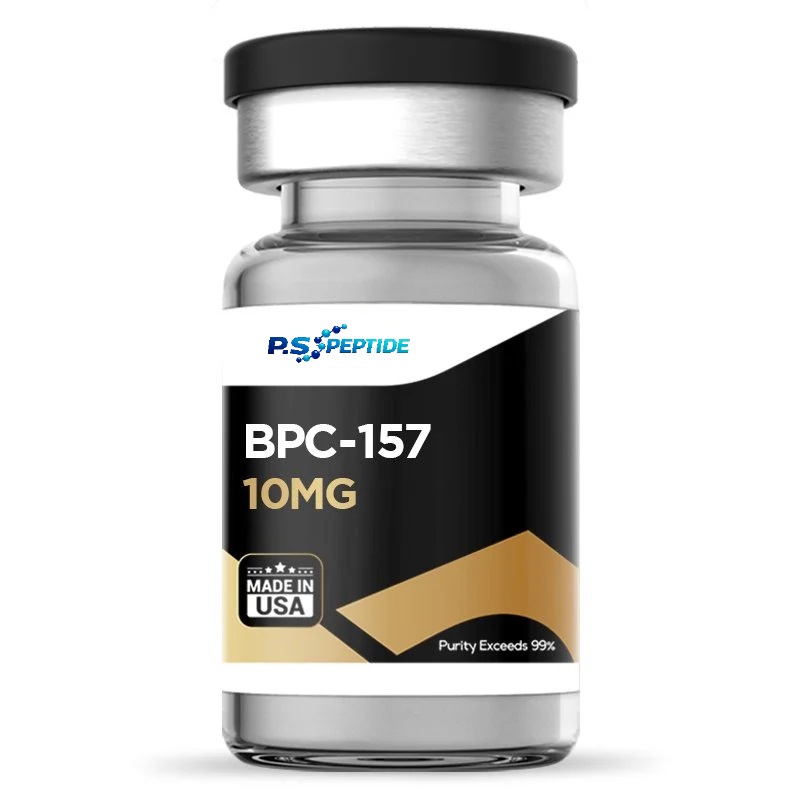
BPC-157 (5mg / 10mg)
Price range: $50.00 through $95.00
Size: 5mg / 10mg
Contents: BPC-157
Form: Lyophilized powder
Purity: >99%
FREE Shipping on $200+ orders
| Title | Range | Discount |
|---|---|---|
| 10% Off | 3 - 6 | 10% |
| 15% Off | 7 + | 15% |
Description
PC-157 Peptide (Body Protection Compound 157)
Advanced Tissue Repair and Regenerative Research Peptide
BPC-157, also called Pentadecapeptide BPC-157 or Body Protection Compound 157, is a synthetic peptide composed of 15 amino acids. Researchers often study this peptide for its potential to support healing in muscles, tendons, ligaments, nerves, and the gastrointestinal system. Because it originates from a fragment of gastric juice, BPC-157 is sometimes described as a natural tissue-protective compound with broad regenerative research potential.
How BPC-157 Peptide Works
Laboratory studies suggest that BPC-157 may interact with growth hormone receptors, potentially stimulating cell proliferation and angiogenesis. By promoting the formation of new blood vessels and collagen networks, the peptide may accelerate tissue repair. Additionally, BPC-157 appears to modulate multiple cellular signaling pathways, such as ERK1/2 phosphorylation and the FAK-paxillin pathway. These actions may enhance cell migration, adhesion, and survival, which are critical processes in tissue regeneration.
BPC-157 also demonstrates potential neuroprotective and gastrointestinal effects. Studies indicate it may interact with neurotransmitter systems, including dopamine and serotonin pathways, supporting research into neuroregeneration, GI repair, and overall tissue homeostasis.
Chemical Makeup
Molecular Formula: C62H98N16O22
Molecular Weight: 1419.55 g/mol
Other Titles: Body Protection Compound-157
Research Applications
BPC-157 and Wound Healing
Experimental models suggest that BPC-157 may accelerate wound repair. Research shows that treated models demonstrate increased collagen deposition, reepithelialization, and dermal remodeling. Moreover, BPC-157 appears to enhance vascular endothelial growth factor (VEGF) expression and endothelial cell proliferation, facilitating angiogenesis and tissue regeneration.
BPC-157 and Tendon Repair
In tendon fibroblast studies, BPC-157 appears to:
-
Promote fibroblast outgrowth
-
Improve cell survival under stress conditions
-
Stimulate migration and adhesion
-
Activate FAK-paxillin signaling pathways
These findings indicate that BPC-157 may enhance tendon healing, repair, and structural integrity by supporting cytoskeletal organization and cellular movement.
BPC-157 and Gastrointestinal Healing
BPC-157 has been studied for its potential to improve GI tract healing. It may counteract serotonin-related inhibition of gastric acid secretion, support mucosal integrity, and stimulate angiogenesis across the digestive system. Experimental studies report consistent effects on chronic and acute wounds, including the esophagus, stomach, duodenum, and lower GI tract.
BPC-157 and Muscle Recovery
Research suggests BPC-157 may restore muscle tissue damaged by corticosteroids or injury. Studies on murine gastrocnemius muscle indicate accelerated repair and improved functional recovery compared to control models. These findings make it a candidate for research on muscle regeneration and repair pathways.
BPC-157 and Nervous System Protection
BPC-157 may exhibit neuroprotective properties. In traumatic brain injury (TBI) studies, models exposed to BPC-157 show reduced brain edema, lower lesion severity, and improved early survival rates. Research also suggests potential modulation of neurotransmitter systems, including dopamine, contributing to neuronal protection and functional recovery.
Broad Regenerative Potential
Laboratory studies indicate that BPC-157 may support healing in multiple tissues, including:
-
Skin, tendon, and muscle
-
Nerve and CNS tissues
-
Gastrointestinal tract
-
Blood vessel networks
By modulating cellular signaling pathways, promoting angiogenesis, and supporting tissue repair, BPC-157 continues to be a focus of regenerative research.
Please review and adhere to our Terms and Conditions before ordering.
References:
- Chang, Chung-Hsun et al. “The promoting effect of pentadecapeptide BPC 157 on tendon healing involves tendon outgrowth, cell survival, and cell migration.” Journal of applied physiology (Bethesda, Md. : 1985) vol. 110,3 (2011): 774-80. doi:10.1152/japplphysiol.00945.2010. https://pubmed.ncbi.nlm.nih.gov/21030672/
- Ormsbee, H S 3rd, and J D Fondacaro. “Action of serotonin on the gastrointestinal tract.” Proceedings of the Society for Experimental Biology and Medicine. Society for Experimental Biology and Medicine (New York, N.Y.) vol. 178,3 (1985): 333-8. doi:10.3181/00379727-178-42016. https://pubmed.ncbi.nlm.nih.gov/3919396/
- Sikiric, Predrag et al. “Brain-gut Axis and Pentadecapeptide BPC 157: Theoretical and Practical Implications.” Current neuropharmacology vol. 14,8 (2016): 857-865. doi:10.2174/1570159×13666160502153022. https://www.ncbi.nlm.nih.gov/pmc/articles/PMC5333585/#r1
Additional information
| Please select size | 5mg, 10mg |
|---|
Related products
-
BPC-157 & TB-500 Blend (10mg/20mg)
Price range: $100.00 through $190.00 Select options This product has multiple variants. The options may be chosen on the product page -
Acetyl Hexapeptide-3 (Argireline) (200mg)
$220.00 Add to cart -
Pal-AHK (200mg)
$175.00 Add to cart -
GHK Basic (Tripeptide-1) (200mg)
$155.00 Add to cart
Reviews
There are no reviews yet.