
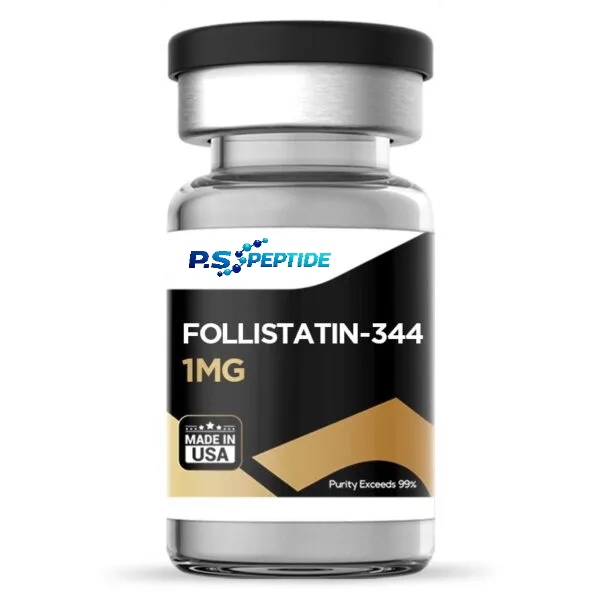
Follistatin-344 (1mg)
$138.00
Size: 1mg
Contents: Follistatin-344 (1mg)
Form: Lyophilized powder
Purity: >99%
FREE Shipping on $200+ orders
| Title | Range | Discount |
|---|---|---|
| 10% Off | 3 - 6 | 10% |
| 15% Off | 7 + | 15% |
Description
Follistatin-344 Peptide: Boost Muscle, Protect Liver, Support Cell Growth
What is Follistatin-344?
Follistatin-344 is a naturally occurring glycoprotein found in nearly all tissues. It functions as an autocrine chemical, meaning cells produce it, and it binds to their own receptors to regulate cellular activity. Follistatin has two isoforms: FST-317 (288 amino acids) and FST-344 (315 amino acids). Follistatin-344 is the predominant isoform, expressed in most tissues, while FST-317 accounts for less than 5% of mRNA expression.
The synthetic version of Follistatin-344 mirrors the natural protein structure, including three domains: FSD1, FSD2, and FSD3. Each domain contains 73–77 amino acids and 10 conserved cysteine residues.
Key Functions and Mechanism
Follistatin-344 primarily binds to activin, inhibiting its function. Activin regulates hormone secretion, such as follicle-stimulating hormone (FSH), and affects muscle and reproductive growth. The peptide is produced in the pituitary gland, gonads, and other organs, and it may circulate in the bloodstream.
Follistatin-344 also interacts with several proteins in the TGF-β superfamily, including:
-
BMPs (Bone Morphogenetic Proteins): Involved in bone formation, cell growth, and development.
-
GDF9 (Growth Differentiation Factor 9): Crucial for ovarian follicle development.
-
GDF8/Myostatin: Regulates muscle growth. Follistatin-344 may inhibit myostatin, potentially increasing muscle mass and promoting differentiation.
Chemical Makeup
-
Molecular Weight: 3780 g/mol
-
Other Names: Activin-Binding Protein, FSH-Suppressing Protein, FST
Research and Clinical Studies
Muscle Development
Follistatin-344 inhibits myostatin, a natural inhibitor of muscle growth. A 1997 study showed that mice receiving Follistatin-344 had 2–3 times more skeletal muscle due to hyperplasia and hypertrophy. Later studies delivered Follistatin mRNA via nanoparticles to the liver, increasing serum Follistatin levels and decreasing myostatin and activin A. After 8 weeks, treated mice gained 10% more lean muscle mass compared to controls.
Unlike anti-myostatin antibodies, Follistatin inhibits both myostatin and activin A, improving muscle mass and function while reducing fibrosis and weakness.
Cancer Research
Breast Cancer: Follistatin may suppress metastasis by binding activin, which otherwise promotes tumor spread. Restoring Follistatin could reduce activin-induced progression.
Esophageal Cancer: Follistatin may interact with BMPs, regulating cellular overgrowth in esophageal tissue and potentially preventing cancer development caused by chronic inflammation or acid reflux.
Cell Proliferation and Liver Protection
Follistatin-344 may enhance cell proliferation by inactivating activin. In rat studies, early liver fibrosis decreased by 32%, and hepatocyte apoptosis fell by 90% after peptide treatment.
Follicle Growth and Hair Stimulation
Follistatin-344 may stimulate interfollicular stem cells, promoting hair growth. In a 52-week clinical study of 26 subjects, hair thickness and density improved by nearly 13% using Follistatin-containing Hair Stimulating Complex (HSC).
Diabetic Models
In diabetic mice, Follistatin-344 increased pancreatic β-cell mass, lowered blood glucose, and improved insulin signaling. It may also upregulate betatrophin, a hormone supporting β-cell proliferation, while suppressing negative regulators like myostatin and activin, creating an enhanced environment for pancreatic function.
Conclusion
Follistatin-344 is a versatile peptide with potential benefits for muscle growth, cancer modulation, liver protection, hair stimulation, and diabetes management. Its ability to regulate multiple pathways makes it a promising candidate for therapeutic and research applications.
Terms and Conditions before ordering.
References:
- Hiroyuki Kaneko, Handbook of Hormones, 2016.
- FST follistatin [Homo sapiens (human)]. https://www.ncbi.nlm.nih.gov/gene?Db=gene&Cmd=DetailsSearch&Term=10468
- Shi, L., Resaul, J., Owen, S., Ye, L., & Jiang, W. G. (2016). Clinical and Therapeutic Implications of Follistatin in Solid Tumours. Cancer genomics & proteomics, 13(6), 425–435. https://www.ncbi.nlm.nih.gov/pmc/articles/PMC5219916/
Reviews
There are no reviews yet.