
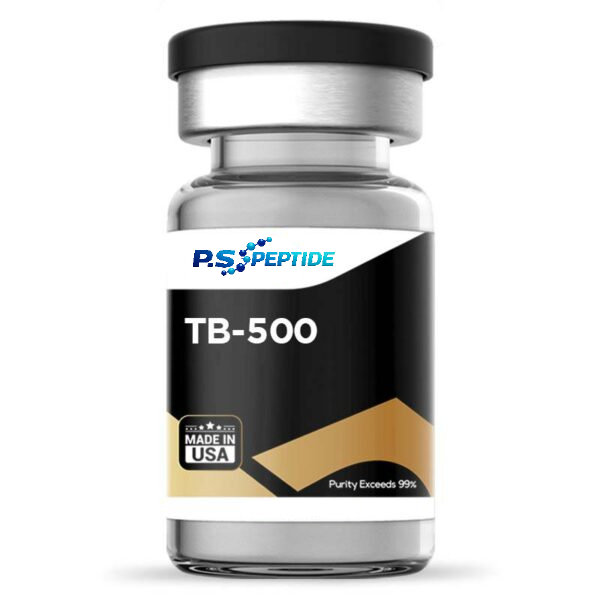
TB-500 (Thymosin Beta 4) (5mg / 10mg)
Price range: $70.00 through $140.00
Size: 5mg / 10mg
Contents: TB-500
Form: Lyophilized powder
Purity: >99%
FREE Shipping on $200+ orders
| Title | Range | Discount |
|---|---|---|
| 10% Off | 3 - 6 | 10% |
| 15% Off | 7 + | 15% |
Description
TB-500 Peptide: Tissue Repair, Angiogenesis, and Cellular Regeneration
It is also known as synthetic Thymosin Beta-4 (Tβ4), is a 43-amino-acid peptide derived from the naturally occurring Thymosin beta 4 protein, encoded by the TMSB4X gene. TB-500 is widely studied for its potential in wound healing, angiogenesis, tissue regeneration, anti-inflammatory effects, and hair growth.
This peptide acts through actin binding, cell migration promotion, and modulation of signaling pathways like Notch, NF-κB, and Akt, supporting cell survival, repair, and angiogenesis.
Chemical Makeup
-
Molecular Formula: C212H350N56O78S
-
Molecular Weight: 4963 g/mol
-
Other Names: Thymosin Beta-4, Tβ4
Research and Clinical Insights
Inflammation Modulation
-
May increase microRNA-146a (miR-146a), regulating IRAK1 and TRAF6, potentially reducing inflammation.
Wound Healing
-
Accelerates acute wound repair: up to 41% increase in re-epithelialization in murine models.
-
Enhances collagen deposition and wound contraction, supporting faster recovery.
-
Accelerates chronic wound healing in diabetic, aged, and steroid-influenced animal models. Phase 2 trials suggested healing improvements up to 1 month faster.
Heart and Cardiac Cells
-
Potentially reduces ventricular hypertrophy in pulmonary hypertension models.
-
Supports cardiomyocyte survival, angiogenesis, and early cardiac repair via ILK-Akt signaling.
-
Promotes cardiac fibroblast differentiation toward cardiomyocyte-like cells and enhances migration of myocardial/endothelial cells.
Hair Follicle Growth
-
Increases hair shafts and follicles in murine skin models.
-
Elevates mRNA and protein expression associated with hair growth.
Blood Vessel Formation (Angiogenesis)
-
Enhances endothelial cell viability, migration, and tube formation.
-
Regulates angiogenesis markers such as VEGFA, Ang2, tie2, CD31, α-SMA, via Notch and NF-κB pathways.
-
Inhibition studies suggest TB-500 acts specifically through these pathways.
Corneal and Ocular Tissue Repair
-
Promotes corneal wound healing and reduces infiltration of neutrophils (PMNs).
-
Modulates IL-1β, IL-6, and chemokines, potentially reducing inflammation.
-
Exhibits anti-apoptotic activity by blocking caspase activation and activating Akt signaling.
Key Benefits of TB-500
-
Accelerates acute and chronic wound healing
-
Promotes angiogenesis and vascular regeneration
-
Supports cardiac and corneal tissue repair
-
Exhibits anti-inflammatory and anti-apoptotic properties
-
May induce hair follicle growth and enhance cellular migration
Please review and adhere to our Terms and Conditions before ordering.
References:
- Kleinman HK, Sosne G. Thymosin β4 Promotes Dermal Healing. Vitam Horm. 2016;102:251-75. doi: 10.1016/bs.vh.2016.04.005. Epub 2016 May 24.
- Ho EN, Kwok WH, Lau MY, Wong AS, Wan TS, Lam KK, Schiff PJ, Stewart BD. Doping control analysis of TB-500, a synthetic version of an active region of thymosin β₄, in equine urine and plasma by liquid chromatography-mass spectrometry. J Chromatogr A. 2012 Nov 23;1265:57-69. doi: 10.1016/j.chroma.2012.09.043. Epub 2012 Sep 23.
- Gurtner GC, Werner S, Barrandon Y, Longaker MT. Wound repair and regeneration. Nature. 2008 May 15;453(7193):314-21. doi: 10.1038/nature07039. PMID: 18480812.
Additional information
| Choose option | 5mg, 10mg |
|---|
Related products
-
Pal-AHK (200mg)
$175.00 Add to cart -
Acetyl Hexapeptide-3 (Argireline) (200mg)
$220.00 Add to cart -
NAD+ Peptide (100mg / 250mg / 750mg)
Price range: $45.00 through $290.00 Select options This product has multiple variants. The options may be chosen on the product page -
Tripeptide-29 (200mg)
$175.00 Add to cart
Reviews
There are no reviews yet.