
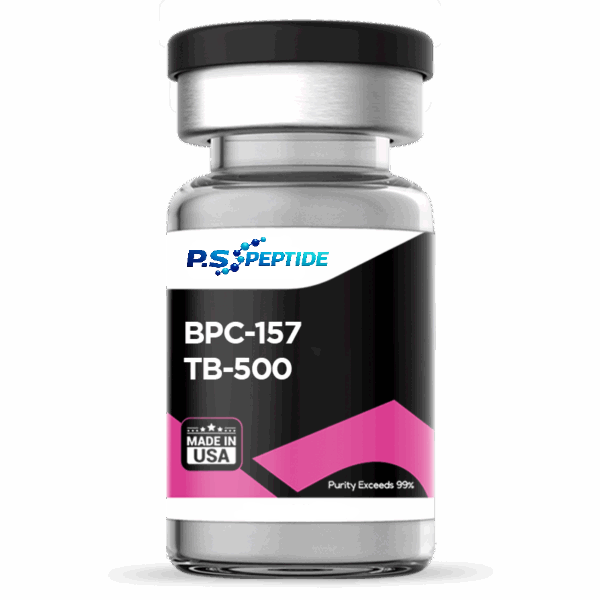
BPC-157 & TB-500 Blend (10mg/20mg)
Price range: $100.00 through $190.00
Size: 10mg/20mg
Contents: BPC-157 5mg/10mg, TB-500 (thymosin beta 4) 5mg/10mg
Form: Lyophilized powder
Purity: >99%
FREE Shipping on $200+ orders
| Title | Range | Discount |
|---|---|---|
| 10% Off | 3 - 6 | 10% |
| 15% Off | 7 + | 15% |
Description
BPC-157 & TB-500 Peptide Blend: Healing and Regeneration Benefits
What are BPC-157 and TB-500?
BPC-157 & TB-500. BPC-157, or Body Protection Compound-157, is a synthetic 15-amino-acid peptide that may promote healing of muscles, tendons, ligaments, and nerves. It is believed to stimulate blood vessel formation and regulate inflammation, supporting tissue regeneration and cell protection.
TB-500, a synthetic form of thymosin beta-4 (Tβ4), is composed of 43 amino acids and may aid wound healing, angiogenesis, and cellular migration. TB-500 potentially enhances neurological, muscle, and skin recovery through cellular signaling pathways.
Blending BPC-157 with TB-500 may amplify their regenerative effects, accelerating tissue repair compared to using either peptide alone.
Chemical Information
-
BPC-157: C62H98N16O22, 1419.5 g/mol
-
TB-500: C212H350N56O78S, 4963 g/mol
-
Other Names: BPC-157 (Body Protection Compound-157), TB-500 (Thymosin Beta-4)
Mechanism of Action
TB-500 enhances cellular motility by regulating actin-cytoskeleton and sequestering G-actin. Its unique amino acid sequence [(17)LKKTETQ(23)] may improve wound healing and angiogenesis. TB-500 also boosts microRNA-146a (miR-146a), which can reduce inflammation through modulation of IRAK1 and TRAF6 signaling pathways.
BPC-157 may increase nitric oxide production, influence growth factors, and regulate inflammatory responses. It supports collagen formation, endothelial protection, and extracellular matrix assembly, which may accelerate tissue repair and angiogenesis.
Tissue Repair and Wound Healing
Studies suggest TB-500 improves wound re-epithelialization. In murine models, TB-500-treated wounds showed a 41% faster re-epithelialization process after four days compared to controls. By seven days, wound contraction improved by 11% versus saline-treated wounds.
BPC-157 also enhances collagen deposition and blood vessel formation in injured tissues. Murine models receiving BPC-157 exhibited faster wound closure and improved tissue regeneration compared to placebo groups.
Ligament and Tendon Healing
TB-500 may strengthen healing ligaments. In studies on transected medial collateral ligaments, TB-500 treatment led to more organized collagen fibers and improved mechanical properties of regenerated tissue.
BPC-157 may accelerate tendon repair by promoting fibroblast migration, F-actin formation, and activation of the FAK-paxillin pathway. Studies suggest that tendon fibroblasts treated with BPC-157 disperse faster and recover structural integrity more efficiently.
Muscle Recovery
BPC-157 may restore damaged skeletal muscles. In murine models of gastrocnemius injury, BPC-157 treatment resulted in full muscle regeneration and functional recovery within 14 days, while placebo-treated muscles showed minimal repair.
TB-500 may enhance cardiac muscle repair under low oxygen conditions. It supports angiogenesis, improves myocardial resilience, and may activate cardiac fibroblasts to aid tissue regeneration. Studies suggest TB-500 improves integrin-linked kinase (ILK) and protein kinase B activity, boosting cardiomyocyte endurance.
Summary
The BPC-157 & TB-500 peptide blend shows potential in accelerating healing, reducing inflammation, and promoting tissue regeneration in muscles, ligaments, tendons, skin, and cardiac tissue. Combining these peptides may maximize their regenerative and protective effects.
Please review and adhere to our Terms and Conditions before ordering.
References:
- Seiwerth, S., Milavic, M., Vukojevic, J., Gojkovic, S., Krezic, I., Vuletic, L. B., Pavlov, K. H., Petrovic, A., Sikiric, S., Vranes, H., Prtoric, A., Zizek, H., Durasin, T., Dobric, I., Staresinic, M., Strbe, S., Knezevic, M., Sola, M., Kokot, A., Sever, M., … Sikiric, P. (2021). Stable Gastric Pentadecapeptide BPC 157 and Wound Healing. Frontiers in pharmacology, 12, 627533. https://doi.org/10.3389/fphar.2021.627533
- Maar, K., Hetenyi, R., Maar, S., Faskerti, G., Hanna, D., Lippai, B., Takatsy, A., & Bock-Marquette, I. (2021). Utilizing Developmentally Essential Secreted Peptides Such as Thymosin Beta-4 to Remind the Adult Organs of Their Embryonic State-New Directions in Anti-Aging Regenerative Therapies. Cells, 10(6), 1343. https://doi.org/10.3390/cells10061343
- National Center for Biotechnology Information. “PubChem Compound Summary for CID 132558700, CID 132558700” PubChem, https://pubchem.ncbi.nlm.nih.gov/compound/132558700
- National Center for Biotechnology Information. “PubChem Compound Summary for CID 9941957” PubChem, https://pubchem.ncbi.nlm.nih.gov/compound/Bpc-157
- Gurtner GC, Werner S, Barrandon Y, Longaker MT. Wound repair and regeneration. Nature. 2008 May 15;453(7193):314-21. doi: 10.1038/nature07039. PMID: 18480812. https://pubmed.ncbi.nlm.nih.gov/18480812/
Additional information
| Choose an option | 10mg, 20mg |
|---|
Related products
-
Pal-GHK (200mg)
$175.00 Add to cart -
Lipopeptide (200mg)
$210.00 Add to cart -
Pal-AHK (200mg)
$175.00 Add to cart -
Sale!
Thymosin Alpha-1 (5mg / 10mg)
Price range: $80.00 through $145.00 Select options This product has multiple variants. The options may be chosen on the product page
Reviews
There are no reviews yet.